Weapons study in Aikidō examines how movement is organized around distance and a trajectory. The bokken, a wooden sword, and the jō, a wooden staff, help us observe the attack line, body orientation and the appropriate moment to move.
Distance and positioning
The Japanese concept ma-ai (間合い, appropriate distance or interval) describes a dynamic relationship between training partners. It depends on the weapon’s length, position, movement intention and responsiveness. In class, this relationship is explored through gradual, controlled exercises.
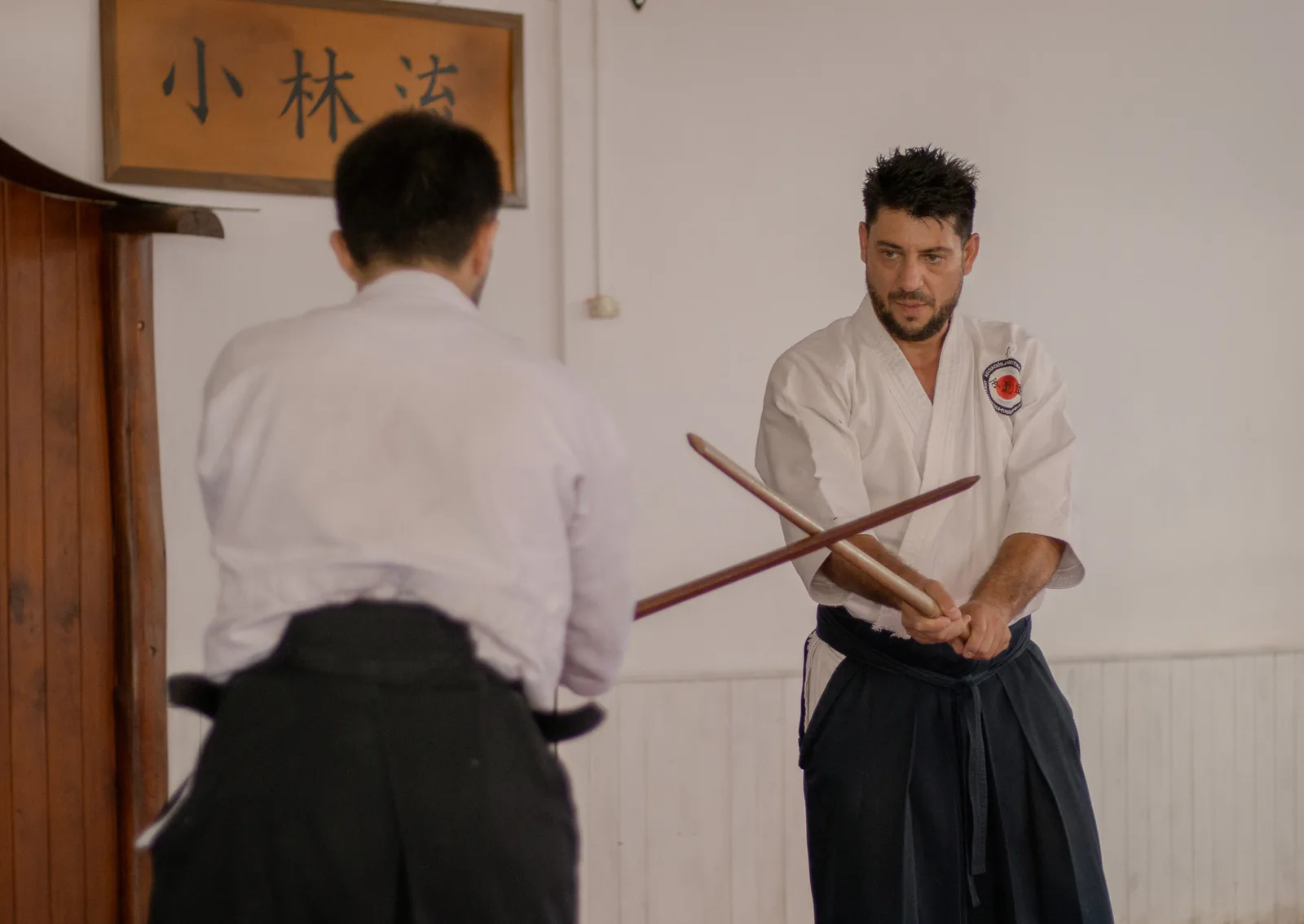
Bokken and sword study
The bokken helps us study the centerline, hand–body coordination, cutting directions and the space between two practitioners. Its value depends on the principles taught in each school, which makes posture and footwork as important as the path of the weapon.
Jō and changing distance
The jō offers different grips and a wide range of straight and circular actions. Training calls for coordination, spatial awareness and precise movement control, with safe distances, clear instructions and supervision.
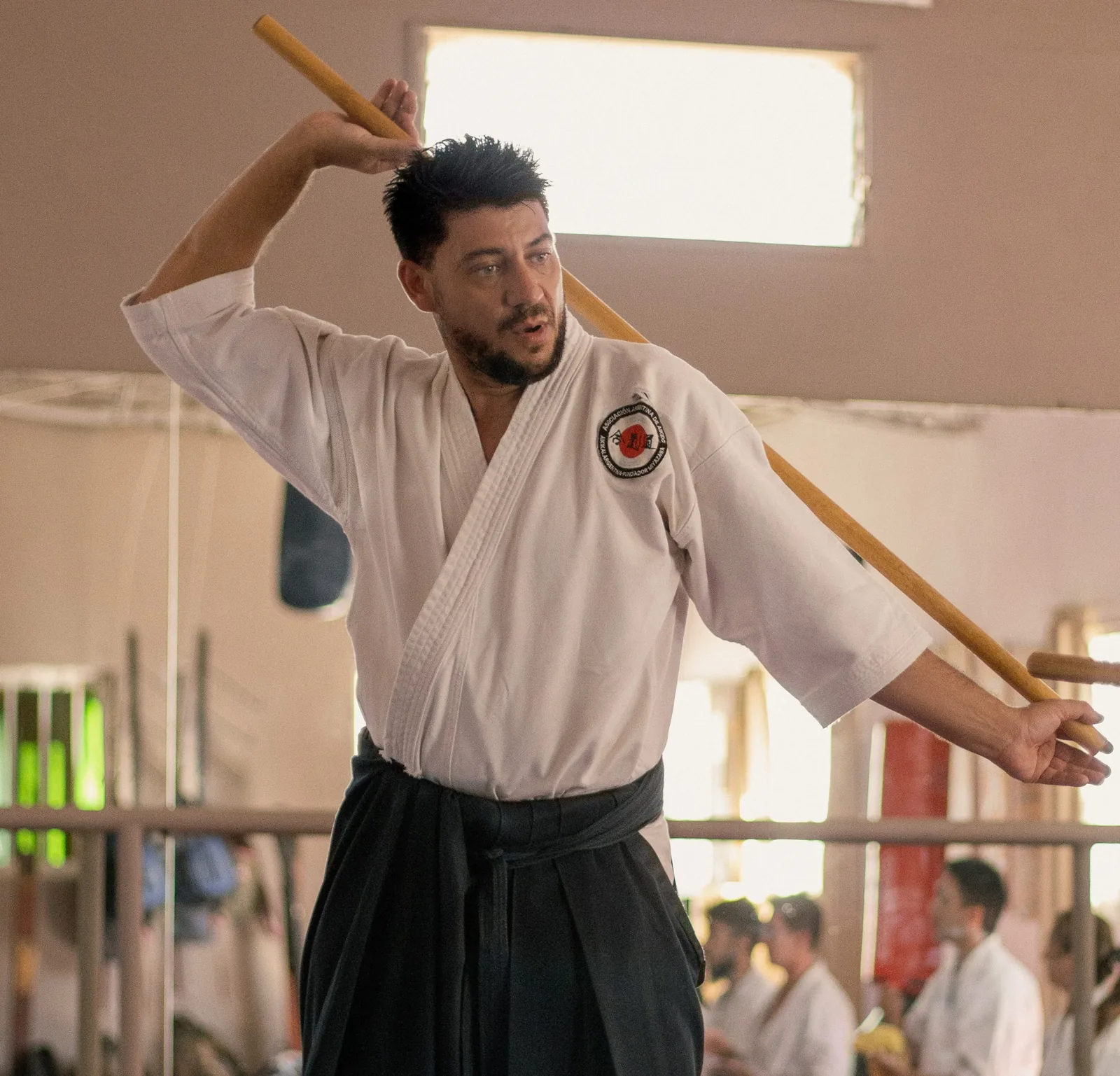
Connections to empty-hand practice
Weapons training and taijutsu —empty-hand techniques— can share principles of alignment, distance, entering, turning and direction. These connections become clear when the same standards for posture and coordination are explored in both settings. Weapons exercises are part of our supervised, progressive training.
You can explore activities and request details in Classes and schedules.